Thursday, October 31, 2013
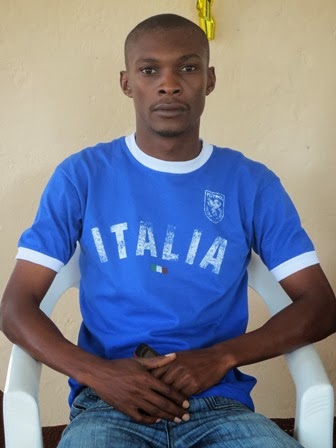
Fr. KeKe's right hand man


Out of my comfort zone
You may wonder what it is like to be alone in a foreign
country with only a slight grasp on the language. I have to tell you, sometimes it is
hard. I am on the shy side an introvert, and some days it takes real effort to make myself go and try to
communicate something to someone. I am
nearing the end of my time here, and there is so much more I would like to
accomplish. It is difficult to force
myself to summon the effort to try to explain, and then to understand. Sometimes I don’t! Sometimes I think I do, but I have
misunderstood. Sometimes I pretend to
understand because I think I have gotten the gist of a conversation. I am writing this because I am trying to help
my readers experience Haiti through my experiences here. Most have been wonderful, but I wouldn’t be
completely honest if I didn’t share my difficulties too.
Sometimes, many
times, I just don’t understand, and it is not just the language. I don’t understand why Haitians build fences
around everything. I know, security is
an issue but... I don’t understand how
even small children can sit still through a two hour mass. I don’t understand how Haitians manage water
when they must carry it home in order to cook, wash and drink. I don’t understand how people get by when
they don’t have jobs that pay. Some make
money by selling things or growing things, but how do the rest survive?
I am reading a book called Travesty in Haiti: a True
Story by Timothy Schwartz. It is
indeed a most distressing book told by someone who worked for an NGO. It is a story of how, well-intentioned or
not, the US and Europe are responsible for many of the problems in Haiti. What you say?
Impossible? Aren’t we the most
generous country in the world? Don’t we
give so much to countries like Haiti?
Unfortunately, most of this largesse benefits our own agriculture
industry but actually hurts Haitian agriculture. He writes about how we and Europe ship food
to Haiti after a hurricane or whatever.
Unfortunately, the food arrives 6 months too late when the Haitian
harvest is in. The food is given to
various NGOs (like CARE, CRS and World Vision).
They “monetize” the food by selling it on the market, thus depressing
the price of food which actually takes food out of the mouths of farmers. The NGOs use the money to pay their
staff. The NGOs have known for a long
time that this aid is not helpful.
Unfortunately, no one gives money to buy Haitian food which would
actually improve food insecurity in the long run. And this is only one area where our actions
have been very detrimental to the Haitian economy. Haitians have had to remove tariffs on US
goods including rice. Haiti used to
produce more than enough rice to feed itself, but US rice, heavily
subsidized by the US government, is cheaper than Haitian rice; the Haitian rice industry is nearly
dead. Haiti used to be a leading producer of sugar, but again, our subsidized sugar lobby has managed to clobber Haitian sugar producers. If you don’t believe me, please
read the book. There is documented
evidence of all of this.
As you can see, I am feeling a little blue today. Hopefully my next post will be more upbeat. I struggle to remind myself in the words of
the prayer of Oscar Romero “I am a worker, not a master Builder”. All will be well! (I think those are words of
Hildegard of Bingen.)
Wednesday, October 30, 2013
The Big Day - The Patronal Feast of St. Jude, patron of Baptiste parish
As I waited for the celebration to begin, some children
noticed I had a camera. They were only
too happy for me to take their pictures!


But let me explain: celebrating patronal feasts in Haiti is very
important. It is a big occasion for the
village and many priests from around the diocese and even beyond come to
participate. In addition, local bigwigs,
politicians (senators and deputies, mayors and magistrates) police and members of
the judiciary are also present. This
Patronal Feast was no different. It
began with liturgical dancers dancing up the aisle
 The procession of
about thirty priests, not counting seminarians and altar servers followed. The church had been beautifully bedecked with
ribbons and fresh flower arrangements.
The procession of
about thirty priests, not counting seminarians and altar servers followed. The church had been beautifully bedecked with
ribbons and fresh flower arrangements.

 The choir and the band filled the church with beautiful sound. Another offertory procession flowed down the
aisle. This one included live chickens
and a collection of what appeared to be mops.
The choir and the band filled the church with beautiful sound. Another offertory procession flowed down the
aisle. This one included live chickens
and a collection of what appeared to be mops.


 In closing, Fr. Cassa thanked all of the dignitaries, priests,
seminarians, choir, band, honored guests (he included me in this!), sacristans
and people who had come from the chapels.
If you ever have the opportunity to participate, it is surely a great
blessing!
In closing, Fr. Cassa thanked all of the dignitaries, priests,
seminarians, choir, band, honored guests (he included me in this!), sacristans
and people who had come from the chapels.
If you ever have the opportunity to participate, it is surely a great
blessing!


Tuesday, October 29, 2013
Learning to cook sos pwa (bean sauce)
Rice with black bean sauce is one of my favorite dishes, so
I asked to learn. A woman whose name is
“My Dream”, one of many cousins of Fr. Cassa came to get me. I asked if her name was English, and she said
yes. I asked why she had an English
name, she told me because her mother chose it.
When I asked if her mother spoke English, she said no! Anyway, they were already in the process of
boiling the beans. Now I don’t know if
they soaked them first or not. After
they were boiled, the beans were strained out of the water, keeping the water. My Dream then showed me how to mash the beans
with a wooden masher.


Novena Masses and Sunday Mass at Baptiste
First I have to explain that there is a novena (9 days)
of Masses before the patronal feast.
This does not include Sunday Mass, thus Friday and Saturday were the 8th
and 9th days of the novena. Friday, Mass was to start at 7 pm with
Fr. KeKe as the main celebrant with Fr. Cassagnol (Fr. Cassa for short) co-presiding. Before Mass, a young man spoke to
parishioners, kind of like at a revival.
He would ask a question and they would respond enthusiastically waving
their arms above their heads in adoration.
The energy in the congregation was palpable. Mass began closer to 7:30 when the choir
entered, followed by beautiful liturgical dancers, showing their love for God
in their dance.

The readings were
different than the readings in the lectionary.
The gospel was the story of the centurion asking Jesus for the healing
of a member of his household, telling Jesus that he wasn’t worthy for Jesus to
come to his house, but he knew that Jesus could just give the command and she
would be healed. Fr. KeKe gave a homily
about faith, that there are three kinds of faith: faith in family, faith in
material things and spiritual faith. Now perhaps faith is not the only
translation of lafwa, but, as I understood (or maybe didn’t), he said that
while all three are necessary parts of life, spiritual faith is the most
important. That is all that I can be
sure of in his homily. The rest of the
Mass proceeded with beautiful, energetic yet devout singing, accompanied by a
keyboard, a couple of electric guitars, tambous (Haitian drums), a drum set and
a saxophone. At the end we sang
“Alleluia Jezi Fos!” meaning “alleluia,
Jesus my strength!” I could not help
feeling richly blessed to be in the middle of these sisters and brothers,
sharing their faith and their celebration.
Saturday’s mass was also scheduled for 7 pm. I arrived early so I could get an aisle seat,
prized territory as many people had already claimed seats on the aisle. I sat toward the back, hoping to be able to
take some photos in the waning light.
When I arrived, the people were saying the rosary. Vibrant, up-tempo
rhythmic singing surrounded me. People
were so joyful in the Lord! Across the
aisle was a mother with a toddler, a little girl who kept escaping down the
aisle.

I enjoyed watching her antics,
remembering when my children were that small and just wanted to be on the
go. Other mothers helped by catching her
and bringing her back to her mother. One
mother in the choir handed her baby of to a woman who beckoned for the
baby. Everyone seemed to know everyone
else. The offertory procession was truly that, the works of the people's hands, fruits and vegetables and even a goat!


Near the end of the Mass around 9:15 the rain began.
It RAINED and RAINED so hard that it was difficult to hear anything
else. I wondered what would happen:
would people make a run for it or wait out the rain? Fr. Cassa began a song which the congregation
took up. Soon, there was dancing in the
aisles, with joyful arms raised in praise to God. About 45 minutes later, the Mass ended and we
walked quickly back to the rectory when the rain had lessened somewhat.
Fr. Cassa had informed everyone on Saturday that Mass on
Sunday and Monday, the day of the Patronal Feast, would begin promptly at 9
am. I arrived a few minutes before 9 to
a nearly empty church which allowed me an aisle seat near the front. Fr. Philogene was the celebrant. Fr. Cassa introduced me and told me that Fr.
Philogene works with him, and with Fr. KeKe on the Pastoral Commission for
Youth, of which Fr. Cassa is responsible at the national level, and Fr. KeKe
for the diocese of Hinche. Fr. Philogene
had traveled all the way from Cap Haitien to be here, a very long way! Surprisingly (for me), when mass finally
began near 10 am, it was not as packed as it has been for the last two days. Still the music was so beautiful, it seemed
to embrace me. The cantor:

The lectors at all of the masses were children:

Fr. Philogene’s homily on the Pharisee and the publican centered on the
importance of humility for everyone, including the officials of the
church. Another beautiful celebration!
Monday, October 28, 2013
A start of the new school day
Every morning, I hear the children at the school. The secondary school children begin at 7 am so theirs are the first voices I hear. The primary school students begin at 8 am. This morning I decided to go and watch the beginning of the school day. Just before 8, I saw the secondary school kids heading toward the soccer field in front of the primary school.


Next, I saw primary school kids. Here are a few of the preschoolers, easy to spot because only they wear pink.

Then the children lined up by class, with the boys in one line and the girls in another.


Note the ruffly socks some of the girls are wearing! The flag was raised amidst singing.


Finally, Sr. Oxilia, Principal of the primary school, and Edary Isaac, principal of the secondary school spoke to the children and the school day began!
A trip to Baptiste
We left Cerca Carvajal around 10 am, with Za and Nicole and
their things. We stopped first at
Colladere, to return a microphone that had been borrowed. We made our way to Hinche and made many
stops: first we dropped off Za at her home and then Nicole. Then it was time for a little shopping. Finally, we stopped by the presbyte (the
rectory: the main rectory in Hinche.
Each of the 4 parishes in Hinche also have their own rectories.) We picked up Fr. Robert who is now the pastor
of Maissade. Fr. KK informed me that we
would now have a new chauffeur. I
wondered at this, because until now he has not allowed anyone else to drive his
new (this year) car. I later learned
that Fr. Robert’s legs are long and he has more legroom in the driver’s
seat. Our trip to the lower plateau was
uneventful since the road is paved and smooth, with a few speed bumps in
places. At Mirebalais we turned to head
toward Lascahobas, Belladere and finally Baptiste. The road to Lascahobas is a good one, but
after Lascahobas the road became very rough.
I had forgotten that most of the rural roads in Haiti used to be like
this, including National Route 3, the road from Port au Prince to Cap Haitien
by way of Hinche. They are working on
the road in places, but they have a very long way to go. In some places it appeared that the road had
been paved in the past but the pavement had deteriorated so that all that
remained were small sections of patches of pavement. We climbed higher and higher. The land has much more vegetation and the
crops are different. Here, coffee is an
important crop. Apparently coffee
requires cooler and more moist conditions.
At any rate, we finally arrived in Baptiste around 5 pm. I was shown to a room with 4 mattresses on
the floor although I have the room to myself thus far. As dusk came, I could hear beautiful choir
music coming from the church. I was only able to take a picture of the church
as the sunset:

Subscribe to:
Posts (Atom)